What’s a Minimum Viable Scooter? Stop Buying “Scooter-Shaped Objects”: A Practical Guide to Choosing the Right Scooter
If you’re getting into scooters, whether for commuting, wrenching, or just having fun, it’s easy to get overwhelmed by the sheer number of options out there. Spend five minutes online and you’ll see everything from vintage two-strokes to suspiciously cheap “brand new” scooters shipped in crates from who-knows-where.
Let’s break things down into a few simple categories, and, more importantly, talk about what to avoid.
The Main Scooter Categories
49cc 4-Stroke Scooters
This is the most common entry point for new riders.
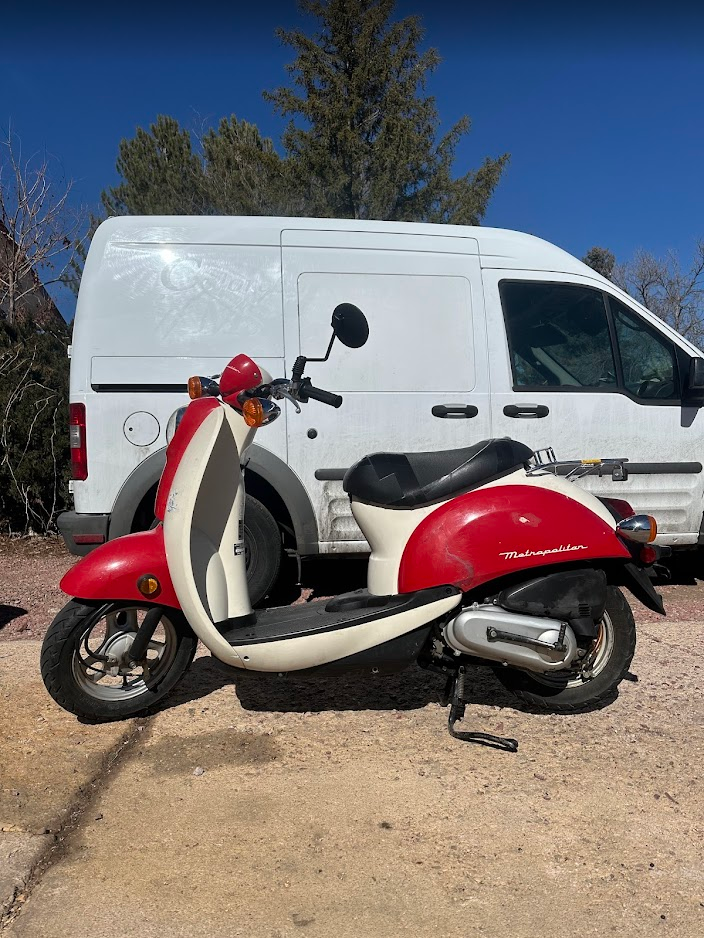
These scooters are:
- Quiet
- Fuel-efficient
- Reliable (when built well)
- Low maintenance
They’re perfect for short commutes and running errands around town. Think of them as the “set it and forget it” option. You won’t win any races, but they’ll usually start every time and sip fuel while doing it.
49cc 2-Stroke Scooters
Now we’re talking about something a bit more lively.

2-stroke scooters:
- Have noticeably more pep than 4-strokes
- Are simpler mechanically
- Are easier to modify and tune
They require a bit more attention with mixing oil (or maintaining an injection system), more frequent servicing, but they reward you with a more engaging ride. If you like tinkering, this is where things get fun.
“Maxi-Scoots” (Anything Bigger Than 49cc)
This is where scooters start to blur into motorcycle territory.

Once you go beyond 49cc, you’re dealing with:
- Higher speeds
- Larger frames
- Better highway capability
Whether it’s a 125cc, 300cc, or larger, these are what I’d consider “maxi-scoots.” They’re practical, comfortable, and capable of real distance riding, not just neighborhood cruising.
The Hard Truth About Cheap “New” Scooters
Now let’s talk about the elephant in the room: those unbelievably cheap, “brand new” scooters you see on sites like eBay or Amazon. I like to call them “scooter shaped objects”.
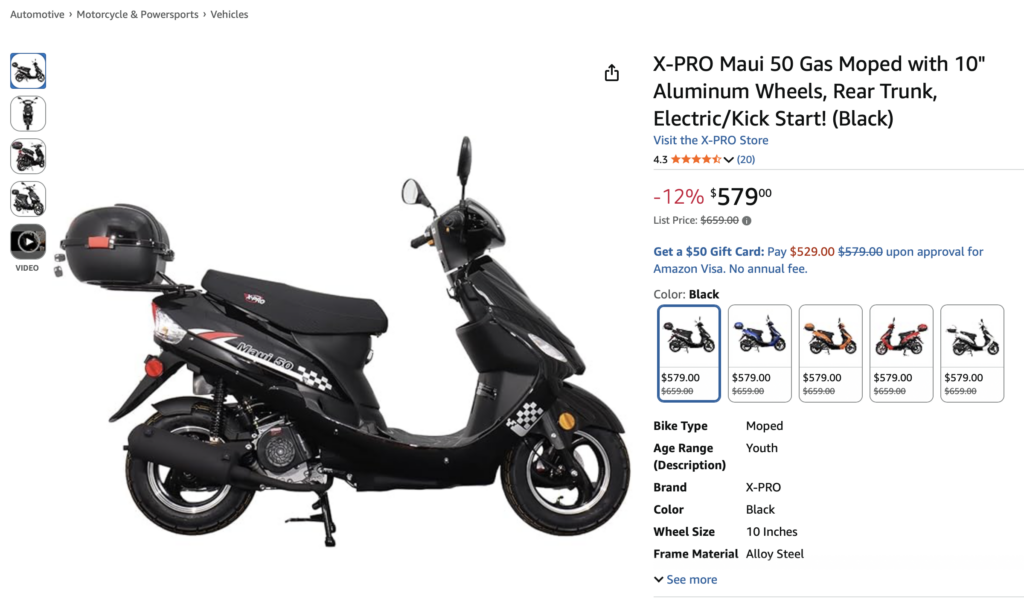
Avoid them.
Seriously.
I’m not saying this to be dramatic. I’ve seen too many people go down this road and regret it. These scooters often look like a great deal upfront, but they come with a long list of problems:
- Poor build quality
- Inconsistent parts
- Questionable assembly
- Zero real support
I like to call them “scooter-shaped objects”. They resemble scooters, but that’s about where the similarities end.
Why They’re a Bad Deal
1. No One Wants to Work on Them
This is the biggest issue.

Take one of these scooters to a local shop, or give them the make and model over the phone, and there’s a good chance you’ll get a laugh, or a flat-out “no.”
Why?
- Parts are hard to source
- Specs are inconsistent
- Labor isn’t worth the headache
Even if a shop does agree to work on it, expect higher costs and longer wait times.
2. They Cost More in the Long Run
What looks like a cheap entry point quickly turns into:
- Constant repairs
- Replacement parts
- Downtime
By the time you’re done, you could’ve bought a solid used scooter from a reputable brand and saved yourself a ton of frustration, not to mention money.
3. They’re Often Poorly Assembled
Many of these scooters arrive in crates and require assembly. If that assembly isn’t done perfectly (and it often isn’t), you’re starting off with:
- Loose bolts
- Misaligned components
- Potential safety issues
Not exactly confidence-inspiring.
Where You Should Be Looking
Used Market (Best Value)
If you’re on a budget, your best bet is:
- Craigslist
- Facebook Marketplace
Look for well-known brands, ask questions, and don’t be afraid to walk away from a bad deal. A properly maintained used scooter will almost always beat a questionable “new” one.
Buying New (The Right Way)
If you want something brand new:
- Go to a dealership
- Stick with established brands
- Make sure parts and service are readily available
Yes, you’ll pay more upfront—but you’re paying for reliability, support, and peace of mind.
Final Thoughts
Scooters are one of the most practical and fun ways to get around—but only if you start with the right machine.
Stick to known categories:
- 49cc 4-stroke for simplicity
- 49cc 2-stroke for fun and tinkering
- Larger scooters for real-world performance on stroads and highways!
And most importantly, avoid the trap of cheap, no-name scooters sold online or at flea markets. They may look like a bargain, but they’ll cost you far more in the long run in money, time, and frustration.
If a deal seems too good to be true in the scooter world, it almost always is.